Showing posts with label Monthly Marvel Musings. Show all posts

Thursday, 5 May 2016

Movie Review - Captain America Civil War: Marvel's Latest Benchmark-setting Masterstroke


The most surprising thing about this latest installment of the Marvel Cinematic Universe (MCU) is not how successfully it juggles a huge ensemble cast of heroes. Neither is it in how it feels relevant and timely to real-world politics. The biggest surprise is how Captain America Civil War, with its epic scope and superhero battles, is the most intimate and affecting of their movies so far.

Yes, the set up is on a grand, international political scale: Captain America (Chris Evans) continues to lead the Avengers against powerful threats, but when a mission ends in tragic loss of life there are calls for the team to submit to UN oversight. The film takes in America, Europe, Africa. There are some weighty political ideas underpinning all this: is power without impunity right? But should the ability to react to a threat be without limitations?

But for each character in this film, the decision whether or not they fall in line and submit to these 'Accords' us not a simple political one; in fact several of them make their choices from purely emotional perspectives. Take Tony Stark (Robert Downey Jr) - with the consequences of his actions in the films leading up to this weighing heavily on his conscience (and impacting on his personal relationships), it is easy to understand why he would be calling for the Avengers to submit to the Accords.

Team Cap are ready to fight...

On the other hand, Steve Rogers, whose moral ideals were shaped growing up in the simpler times before WW2, has struggled to find a place in a world of political espionage and intrigue; just look what happened to SHIELD. When he argues that, if the UN doesn't agree with the Avengers taking action when they deem it necessary, their hands are tied - especially if it's the other way round.

Straightaway there are so many nuances and shades of grey to the set up - both points of view are absolutely correct. When the issue is clouded further by the reemergence of Rogers' long lost friend Bucky, now brain-washed super-assassin The Winter Soldier (Sebastian Stan) in the midst of a terrorist atrocity, the emotions behind Stark's and Cap's choices are key to igniting - and sustaining - the civil conflict that follows.

With the main character's motivations so well defined, you'd be forgiven or thinking that the cast of supporting 'Supers' are just there to make up numbers, that they're relegated to the background, with no plot or character development of their own.  Well, you'd be wrong - in this film every member of the Avengers, every character that pops up to aid either Cap or Stark, go on their own journey.  Some are greater, and have more weight than others - but at no point does any of the characters feel wasted or under-developed.  And considering this film introduces two significant new characters to the MCU - Black Panther (Chadwick Boseman) and Spiderman (Tom Holland), that is a genuine achievement -compounded by the fact that both of these characters are handled outstandingly well.  Black Panther is given the greater arc of character development, and Boseman is assured in the role, giving T'Challa an understated yet palpable sense of regalness, humility, grief, and righteous rage.  By the end of the film such is the journey his character takes, and such is the effectiveness with which he is portrayed, that if this was to be his only film appearance, only the most die-hard Black Panther fan would feel unsatisfied with the portrayal.  (Thankfully, it won't be and his forthcoming solo film is an even more enticing prospect after watching him in this one.)

The introduction of Black Panther (Boseman) to the MCU is handled exceptionally well in this film.

And then there's Spiderman; I welled up and shed a tear at four points during this film, and one of those moments was his introductory scene, where we meet a teenage Peter Parker and his Aunt May (Marisa Tomei).  This scene is so perfectly, beautifully handled, that it is easy to forget that this is the third incarnation of the character; without regurgitating the same lines - the famous ones - everything that he says communicates everything you'd hope to see, expect from the character. You know exactly what he has been through to become Spiderman without him mentioning Uncle Ben, or the responsibility that comes with etc etc.  Then when we see him in action, he brings such joy and humour to the movie - not that it is something the film needs - but it feels completely on point for the character.  If they continue to portray Spiderman as effectively as this film has, then Holland's portrayal may end up being considered the definitive one.

...as is the introduction of a certain wall-crawling, web-slinging hero...

I mentioned this film brought me to tears - as I said, despite the political context that brings about the narrative, despite the action (that, once again, sets new benchmarks for the depiction of superheroes on film - especially during the spectacular Airport confrontation), I wasn't prepared for how emotional this film is.  Grief, guilt, anger, revenge - all play a part in the motivations that lead to the events of the narrative.  Because of this, there are no clear right or wrong decisions - some actions are more defensible than others, but all are understandable from different points of views.  Even the villain, Zemo (Daniel Brühl), eschews the stereotypical mustache-twirling or psychopathic megalomania that these type of films usually portray.  His quiet, unthreatening portrayal admittedly is at risk of getting lost in the bombast of the film's action - but is central to the movie's most devastating scene as it draws to a close.

Apart from a couple of plot points that feel a little convenient, rushed maybe; and the occasional wobbly bit of digital compositing; this film is blockbuster movie making at its most effective and exciting.  Directors the Russo Brothers bring the same feel of veracity they brought to 'The Winder Soldier's' action scenes, and handle the massive cast with such assurance that it's easy to forget just how miraculous it felt when Whedon pulled off putting 6 superheroes in 'Avengers Assemble'.  With its story that feels pertinent to real-world global politics; nuanced handling of complex issues, morality and emotions; and confident top-tier film-making, Marvel once again raises the bar of what is possible with not just Comic Book movies, but action-blockbusters too.  It is hard to see how they, or any other studio, will match their achievement with this 'Civil War'.

Sunday, 20 September 2015

Monthly Marvel Musings: Creating a rivalry between Marvel and DC movies is pointless and counter-productive

I'm about to start a new job, which I'm super excited about, but a minor down-side is that it'll involve a bit more commuting than my current one - as a result I'm anticipating I'll have a lot less time for this blog.  Especially over the next 6 months as I'll be intensively involved in finishing a course I'm doing.  So after this post things might go more quiet than they have been recently, but rest assured - I'm not giving up on it entirely.  Here's a post I've been planning on writing for almost two months - thanks for reading!


MONTHLY MARVEL MUSINGS


Why a rivalry between Marvel and DC movies is pointless

If you enjoy comic book adaptations and the Superhero genre, this really is a golden era.  We've had a take on Batman that has embraced the fact comic book characters can have real world relevance, and make commentary on real world political situations.  We've had a take on X-Men that, over several films, have fully grasped the social commentary that underpins these characters, as well as the cinematic potential of portraying their mutant powers on screen.  And Marvel Studios are demonstrating that it is possible to turn cult, or less well-known characters, in to box office gold by focusing on what has made them so enduring in print - interesting characters and memorable stories.  Sure, there are still stumbles along the way - some adaptations don't work as well as others - but on the whole if you enjoy films, and you enjoy superhero stories, you've got to be pretty happy at the moment.


"Marvel's better than DC because-" "No, DC are better than Marvel!"  Err, hey, it IS possible to like both, okay?


Sadly this isn't enough, and with Warner Bros finally getting their act together and developing a shared big-screen universe for their DC properties, the rivalry between Marvel and DC is being reignited by many fans - regardless which company's work they prefer.  On one side, DC fans point out how most Marvel characters are 'imitations' of DC Characters established well before them - which is a good point: before Quicksilver there was The Flash; before Mr Fantastic there was the stretching Plastic Man; Green Arrow wielded a bow over 20 years before Hawkeye did; and many more besides.  On the other side of the argument, Marvel fans point out the popularity and success of the Marvel brand, with many characters becoming as iconic - more so, in a lot of cases - than DC.  On top of that the success of Marvel Studios, is being used by Marvel fans to sneer at DC.  But since the trailers for 'Batman vs Superman' and 'Suicide Squad' dropped some DC fans have gone on the attack, using the darker and more serious tone of these films to justify a point of view that they are making better Superhero movies than the Marvel ones.

To me, these attitudes - all of them - are pretty idiotic, and in fact completely counter-productive.  To my mind, whilst there is a difference in aesthetic and tone that will set the two franchises apart, key to them are two things: respect for the source material, and drawing upon why these characters have been, and still are, so beloved by fans after decades.  I would argue that these are the foundations that have given us films like Donner's 'Superman', Singer's 'X-Men', Nolan's Dark Knight Trilogy, and the Marvel Cinematic Universe.  All of these films are very different in their ways, and at the same time have been influenced by its predecessor.  For example, Singer made no secret of his love for Donner's first 'Superman' movie, and it influenced him making X-Men.  You can see how the success of the X-Men film - taking a fantastic concept (people with mutant powers), but honing in on the part that makes it relevant and grounded in the 'real world' - arguably spurred on Warners' decision to make their Nolan directed Batman reboot very realistic, grounded, and believable.  Kevin Feige, head of Marvel Studios, has spoken about how the success of Warners' Batman and other DC films enables Marvel Studios to keep making their films - and inspiring them to make them better.  And you can argue that without the success of 'Avengers Assemble', Warners/DC would not have got their act together and started the process of bringing the Justice League to the big screen.


'Batman Vs Superman' is looking to be a very exciting prospect - despite the initial scepticism of many (myself included)

So when you start banging a drum about which companies' characters are getting the better films, or the better on-screen shared universe, I do believe that you cheapen BOTH sets of films.  For example, 'Man of Steel' and 'Batman vs Superman' director Zack Snyder has spoken about his enjoyment of some of Marvel Studios' movies, and emphasising the difference in approach and tone the Warners' DC films are taking.  I can appreciate that - to me, it's not that the DC films have more 'real world' relevance/relatability (Marvel films have been doing this, only without banging on about it as vehemently - take 'Captain America The Winter Soldier's references to the ethics of drone warfare, or 'Iron Man 3's satirical swipes on the War on Terror, with a 'manufactured' threat to justify continual militarisation for arms companies to profit from).  I'd say the big difference is that Snyder is focusing upon the iconography of the comic portrayals of Batman and Superman, and also the 'mythic' qualities of the two, as representations of two sides of America's psyche (and how it is perceived by other countries).  Marvel, on the other hand, are very much about the characters, and bringing their iconic moments and stories to the screen, in a way that respects the source material and also works cinematically.


Sure Zack... DC Characters are always more serious than Marvel, and are making a big, sweeping, mythology.  Bet your faithfulness to the source material won't extend to putting a moment like this one in your DC films... (source: Cheezburger)

Unfortunately, Snyder recently made disparaging comments that suggest he looks down at certain comic/Superhero characters as somehow being lesser or inferior, when he described Ant-Man as a "flavor of the week" superhero.  After spending so much time emphasising his respect for the source material, looking to much admired and respected stories, authors and artists to inform his soon-to-be-released film, Snyder has arguably undone much of that with this comment, as it betrays a lack of respect for the history and significance of these other characters.  For example, although Ant-Man has never been as popular as many other superheroes (either Marvel or DC), it is a character with over 50 years of history, and in terms of story has been an integral part of many memorable and influential events: Ant-Man was in the original Avengers comic line-up, and was the creator of Ultron; not only that, the original Ant-Man Hank Pym was portrayed with significant psychological issues (including spousal abuse) long before the likes of Frank Miller began delving in to those that motivate a character like Batman.

So whilst some of his comments have been by and large neutral, Snyder's recent comments do seem to betray an opinion that Warner's DC movie universe will be 'better' than Marvel's.  This is highlighted by comments, not just from him, but other execs from Warners, that their films are 'serious' and relate to the 'real world'.  I've touched upon the 'real world' issues Marvel films have at least made reference to, but this is more about Marvel Studios including more moments of levity in their films - something that DC will avoid.  Putting in a witty one-liner, or a moment of humour, does not detract from making a comic book/Superhero movie a serious adaptation - it's a matter of putting these moments in the right place, at the right time, so that when there is a dramatic, shocking or emotional moment, these aren't undermined.  Making out that the DC movies will be 'better' because they're side-stepping this is disingenuous - although a serious tone suits Batman, DC fans would have to admit that in the comics there have been no end of goofy, silly, and pointlessly-funny moments (some better than others) - and that goes for Marvel comics too.  Look at DC characters on TV - the 'tone' is probably closer to what Marvel is doing, and it works - 'Arrow' and 'Flash' have been entertaining, fun when it's right, serious when it's right, emotional when it's right, witty when it's right to do so.  As great as it is when a writer really takes the psychology or social commentary inherent in a particular character seriously, people read comics first and foremost because they're fun (and because Superheroes are, most of all, awesome!).  So the people steering the DC films need to acknowledge this, and stop suggesting a 'serious tone' is better than including moments of levity.


Snyder is clearly aiming to take his visual cues from the depiction of the characters from the comic artwork, which a welcome approach and has got comic fans excited.

And it's not just approaches to the tone or the source material where Warners' have been making digs at Marvel; an executive suggested that Warners' DC movies would be better than Marvel Studios, as they would allow Directors to bring more of their creative voice and ideas to the DC property(ies) they direct.  Firstly, this is nonsense, because when you watch nearly all of the Marvel Studios films it is possible to see the influence of the Director - in fact, Marvel Studios choose their Directors because their previous work reflects the tone they want for the film.  Take Joe Johnston's 'Captain America The First Avenger' - with its pulpy tone, period setting, and retro sci-fi, it harkens back to Johnston's earlier film 'The Rocketeer', which has a massive cult following.  When you watch Jon Favreau's Iron Man movies, part of the reason they work (admittedly better on the first than the second) is the improvisational space he gives the actors, allowing them to bounce off each other and bring real charisma to the film.  And look at 'Guardians of the Galaxy' - it has just as much heart, sarcasm, wit and inappropriate humour as James Gunn's previous films as a director (like 'Slither' and 'Super') and writer (like the 'Dawn of the Dead' remake which - hey! - Snyder directed).  Having said that, there is a process these films go through - the producers know what they want to do, how they want to steer the franchise, and which parts of the comic they want to follow or take more from.  This means that compromises have to be made when Directors want to add something that they want in the film.  Gunn has acknowledged this, and Joss Whedon made no secret of the battles he had over parts of 'Avengers Age of Ultron' he wanted, and that the Studio wanted.  Warners are no less immune to this - further highlighting that the comments are nonsense, despite stating this, they fired planned director Michelle MacLaren from Wonder Woman, as her vision did not match what the studio wanted.

Who is right in these situations?  Is it the Director, who is struggling to bring artistic integrity to a film that is, at the end of the day, part of a corporate brand?  Or is it the studio, who wants to stay close enough to the source material so as to please fans and audiences with a satisfying (and financially successful) adaptation?  I'd say both, and to get there does require compromise, that is clear.  So for Warners to make out that their DC films will be more director led, and therefore have more 'creative' or artistic worth' but then lose a director because they didn't want her artistic and creative interpretation, again shows that this is at the very least and unhelpful (and arguably false) view.


For comic book and Superhero fans, the prospect of seeing the Trinity of Batman, Wonder Woman and Superman together on the big screen is a fairly momentous and exciting one...

Ultimately, trying to argue that one company's creative output in the same genre is better than another, at this point in time, is fairly pointless.  I grew up with the Donner Superman film, watching Batman on TV, reading Spiderman in comics, and thanks to Tim Burton's Batman and Singer's X-Men, I have never lost that fascination in these characters and stories in to my adulthood.  I will watch films based on Marvel or DC characters, and my expectation will be the same for all of them: that they will entertain me, that they will reinforce what it is about these characters that make them so enduring and flat-out cool; and I will be told one of the many stories that have enthralled readers for decades - in a way that is cinematic: visually thrilling and absorbing.

For the record, I am absolutely thrilled about seeing Batman Vs Superman, and Suicide Squad next year, and I am looking forward immensely to seeing the Justice League on the big screen, including all the characters that have made up that team in their own adventures.  Just because I am an avowed fan of the MCU does not mean I cannot be excited about the upcoming DC slate.  Sure, it may be that some of these movies don't live up to our hopes and expectations - that is always the way with this genre.  Marvel Studios has got its weaker films, and there are weaker entries in every other Superhero franchise (Marvel and DC based).  Ultimately, if you're someone who has ever enjoyed Superhero stories - regardless of whether they're in comics, as a cartoon, a tv drama, or a movie - you should be grateful and excited that we're in an era when Studios, Writers, Directors and Actors not only take the genre seriously, but want to make each film the best and most faithful adaptation they possibly can.  Arguing over which company does it better just mars this enjoyment, creates opinions that don't really stand up to much scrutiny - and is arguably counter-productive.

Instead, we should be very grateful that we are hopefully going to see great adaptations of characters and super-teams who've yet to have their shot at big screen success (The Flash, The Inhumans, Wonder Woman, Captain Marvel, Justice League).  Whether they're Marvel creations or DC characters, I am excited to see their movies, and hope they get the treatment they deserve.  You might prefer the DC characters over Marvel, or vice-versa, but when either does well it is to the benefit of the other - whether it's the inspiration to do better, or showing that the risk of investing a budget to get the adaptation right is worth it for the Studio.  That is more productive than a silly argument whether Justice League are better than The Avengers...

Friday, 21 August 2015

Monthly Marvel Musings: How to (finally) get Fantastic Four right

This month I had intended to write a piece about the pointless ‘rivalry’ between Marvel and DC movies, but given the failure of ‘Fantastic Four’, and the fallout around it, I wanted to reflect on whether there is a future for these characters on screen.  In a nutshell, I am pleased to say that – despite everything – there is.


MONTHLY MARVEL MUSINGS

Although many people have gleefully laid in to the new ‘Fantastic Four’ movie with a glee bordering on the macabre, I’ve got to admit the film’s failure has made me sad.  I saw the film a second time last week (I had promised to take my son), and as I began to enjoy parts of the first half of the film (especially the traumatic depiction of the accident that gives the team their powers), I actually found it saddening at the same time.  There was clearly an attempt to do something interesting and different with this superhero comic adaptation – but for various reasons it failed.  There’s mud-slinging going on from both sides, but ultimately it comes down to two things: Fox didn’t really want to make the film Josh Trank wanted to make – and the film was clearly rushed in to production to beat the deadline for the rights expiring, but before the script and plot had been properly settled upon.  This will be a film that people will take great pleasure in analysing the troubled production and fall out for many years to come – even though Fox claim they want to move forward with a sequel, it is likely they will consider the negative publicity, and box office failure of this film, to have tarnished the franchise too much.

Seems like everyone's got it in for the Fantastic Four lately...

It may be that, in months to come, Fox will sit down with Marvel Studios to discuss the rights to Fantastic Four.  If this happens it will be a good thing for comic book fans – despite the previous failed attempts to portray these characters correctly on the big screen, there is arguably still a way to get them right.  And that especially goes for Doctor Doom, the greatest Marvel villain, who Marvel Studios could incorporate in to some epic story lines and future movies.  If Marvel and Fox do start these discussions, how can a future movie based on Fantastic Four succeed where the previous ones failed?  Here are some of my ideas…

(Partly) set it in the era they were created – the 1960’s

It’s a well-known fact that over 10 years ago ‘Ant-Man’ director Peyton Reed was developing a '60's set Fantastic Four movie, which Fox abandoned.  It’s one of those great cinematic ‘What-Ifs?’, but it’s easy to imagine that that version would have been better than the films which were eventually made.  But I think this is a good starting point for any future FF movie – ‘Captain America The First Avenger’ and ‘X-Men First Class’ demonstrated that comic adaptations, set in the era they were first created, can work very well.  In the dream scenario that Marvel Studios get to work FF back in to the MCU, you could depict the forming of the team and them gaining their powers during that era – matching the same pulpy, retro Sci-Fi tone that was an element of the first Captain America film.  However, I say ‘partly’ because, well we’ve seen two origin stories for the team on film so far – the next version would be better to have the team already with their powers established, but show flash-backs to when they gained their powers (we've already had two version of their origin story on film).  This might make you question why, if they’ve been around since the '60's, have they not been mentioned or seen in the MCU before?  There’d be a very good reason for that…

Make this Marvel’s version of ‘Star Trek’

…this film would be an outer-space adventure, along the lines of Star Trek or the ‘Lost in Space’ series.  Although in the comics the FF are mainly earth-bound, many of their most famous and memorable stories have them encountering (and occasionally battling) various alien races and beings.  In fact several comic stories have them traversing across galaxies and dimensions, so why not their films?  This could tie back to their origin, and the ‘60’s setting: why not combine the classic origin story with the Ultimate version (which the current film takes its cues from), and have the team and Doctor Doom (more of which later) developing a new form of rocket that includes a very experimental form of drive which (unbeknownst to them) uses technology capable of crossing dimensions?  When the rocket is first tested there is an accident of some sort, which sends the team across space to an unknown galaxy – and giving them their powers as they cross alternative dimensions to get there.  

Several Fantastic Four stories take place in outer space, on alien worlds, or other dimensions - if you can't make them work 'on earth', why not set their stories in space then?

The film could then set up how the team are trying to make their way back to our galaxy, and earth, and encountering the aliens they’ve famously battled in the comics as they do so.  This approach would give Marvel Studios an opportunity to make a film in a genre they’ve not yet used (Kevin Feige is keen that each film is at least inspired by, or done in the style of, a different genre pic e.g. ‘The Winter Soldier’ = conspiracy thriller, ‘Ant-Man’ = heist movie) – the sort of Space-faring adventure that made ‘Star Trek’ and ‘Lost in Space’ so popular in their time.  This would give the comics fun tone, with its famous ‘family’ dynamic, a setting where it would feel more appropriate, and so (hopefully) work better.  Having them trekking (!) through space would reflect their classic team /family dynamic: Johnny Storm would be the pilot, Ben 'The Thing' Grimm the ship's engineer, Reed Richards the Chief science officer, and Sue Storm the vessel's chief medical officer.  You could feed them in to the MCU through a future Guardians of the Galaxy film (they could be introduced in a cameo or post-credits sting) before depicting their own adventure, which in turn could set up the coming of Galactus and Annihilus – surely worthy of being the antagonists of a future Avengers movie?  But that’s not the only villain you would be getting in to the MCU…

Doctor Doom could finally be portrayed right

Even if the current Fantastic Four reboot had been better, it still would have arguably failed in one important area: faithfully and effectively portraying Doctor Doom on screen.  As I mentioned in my review, the film portrayals need to stop trying to play down all the elements that make up the character, and fully embrace the near-operatic scope.  I would argue Doom could be introduced before the FF themselves, as a back-ground villain/threat, in the same way that Thanos has been used in the MCU so far.  Certainly, in the comics, he is the most powerful Marvel villain (he recently stood against inter-dimensional beings capable of destroying entire universes!) – but he has surprising nuances.  Whilst he is a totalitarian leader of his native Latveria (making a nice counter to Captain America and his espousing of democracy and freedom), under his rule the country and its people have prospered.  As well as being a scientific genius and strategic master, his background is marred by tragedy; in the comics there are a number of stories where he is trying to rescue his mother’s soul from hell and the devil himself.

A successful translation of Doctor Doom on screen should completely embrace the part where he is the ruler of Latveria

I think this can be reworked slightly to make Doom an amazing villain in the MCU.  Over the course of several films, the heroes could discover (or inadvertently discover) links between their films’ villains and Latveria.  Over time it becomes clear that Doom is behind these – but no one can act because he is hidden behind a diplomatic wall as ruler of Latveria, where he rarely leaves.  Eventually, someone discovers what Doom is trying to do – create a transport to cross dimensions.  He has been doing this because his father, almost 70 years ago, had been experimenting on the very same thing – and during one of the experiments Doom’s mother was sucked through to another dimension (a change to the comics that would feel plausible, but allowing potential crossover with Doctor Strange, as in the source material).  Ever since, Doom has made it his life’s work to perfect the technology and rescue his lost mother.

This is how he became involved with the Fantastic Four – he helped them to develop and build their rocket as a way of furthering his own experiments on the dimensional crossing technology.  Of course, he still hadn’t perfected this, resulting in the accident which banishes the Fantastic Four, and leaves him with the disfigurement requiring him to live his life in a suit of powered armour.  As his experiments continue, the Fantastic Four (who have been tracking Galactus as a way of finding their way back to Earth) and other MCU characters (e.g. Doctor Strange) realise he is drawing dangerous beings towards Earth – beings such as Galactus, the devourer of worlds.  Desperate to intervene, but unable to due to international political will, SHIELD sends a covert team to Latveria (Secret Avengers) to try and stop him – they fail and Doom retaliates by attacking New York and the UN.  Eventually Galactus reaches earth – and it takes the combined might of the Avengers and the newly returned Fantastic Four to defeat the cosmic being.  Another team of heroes eventually defeat Doom, but not before he has activated his technology – and brought the attention of other extra-dimensional beings (e.g. Annihilus), setting things up for the next phase of MCU movies.

Doom hasn't only taken on the Fantastic Four - he's possibly the most central of Marvel's villains.

Taking this approach would arguably give enough space to develop a portrayal of Doom that is respectful and faithful enough to the comics to work on screen.  Here you would have a Doom that is as powerful – intellectually, politically, and of course in terms of abilities – as he should be; but also nuanced and interesting enough to make him a great movie villain, worthy enough to sustain several films.  Because as great as the Fantastic Four could potentially be, Doom has possibly the greatest value in terms of potential stories to adapt.  In the comics he has crossed over with pretty much all of the Marvel characters at some time – The Avengers, Iron Man, Spiderman, X-Men – so there is enormous potential.  Not to mention the fact he is not just a one-dimensional villain, but a comparatively nuanced character with at times morally ambiguous motives, and a surprisingly sympathetic element to his backstory.  But, he is a proper villain, who would think nothing of sacrificing any who stands in the way of fulfilling his plans – and most importantly he has the power to achieve these (not to mention overcome the heroes).

This franchise needs to go home

There’s little doubt, almost everything about Fantastic Four – including the villains – would be much more at home in the MCU; so hopefully in the coming months there will be financial pressure on Fox, following the financial failure of the latest ‘Fantastic Four’, to negotiate the return of the rights to Marvel Studios.  Because even though the fans are saying that this is what they want – there’s even a petition calling for this – any discussions between Fox and Marvel Studios will only happen because the accountants at Fox decide the only way for the franchise to make money is either selling it back, or sharing (ala Spidey/Sony).  And this is the strange thing in all of this – whilst it is sad to see a talented director and cast potentially have their careers tarnished as a result of this film, on the other hand it is potentially exciting that Fantastic Four might finally have their chance to join the MCU.  Time will tell!

Please Fox - sell the rights back to Marvel Studios! They'll be happy.  We'll be happy.  The Fantastic Four will be happy.  You'll be happy !  Well, happier than you were when the box office for the current film's opening weekend came in, I should imagine...

Wednesday, 29 July 2015

Monthly Marvel Musings: A close-up look at 'Ant-Man'

Here's this months 'Monthly Marvel Musings' article, which will be all about 'Ant-Man' - I'll do a brief review of the film, then take a closer look at a few things which will have a bearing on what's going to be in other films.  Obviously, there will be pretty major SPOILERS!! so only read on if you've already seen the film.


MARVEL MONTHLY MUSINGS

'Ant-Man' is a small success for Marvel
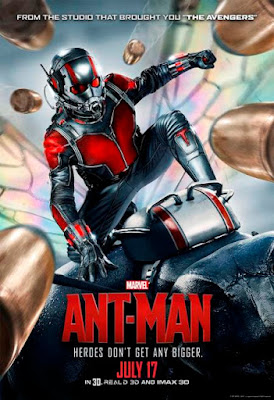

At the very least you have to say that 'Ant-Man' has had an eventful journey to the screen.  It's very well publicised that, after 7 years developing the film, original Director Edgar Wright walked away due to creative differences with Marvel Studios - apparently he wasn't happy with the film having links to the MCU and wanted it to be stand-alone.  Then Peyton Reed was brought on board, and many people raised an eyebrow based on his previous films - Jim Carrey comedy 'Yes Man', 60's throw-back comedy 'Down With love', and cheer-leading drama 'Bring It On'.  The project was in danger of being written off just as filming was about to begin, simply because Wright's departure was seen as signalling the end of any chance the film had at having a distinct style or humour (as with Wright's previous films).  But attitudes began to soften when it emerged that Reed has been a life-long fan of Marvel Comics, was runner-up choice to direct 'Guardians of the Galaxy' (which has made the actual director, James Gunn, arguably as famous as its break-out cast); and he had been developing a 1960's-set Fantastic Four movie for Fox - the opening scene of which would have been based on the iconic cover of the first ever FF comic.

Now the film is here, although it is not the disaster many feared following Wright's departure, it is almost a curio in the midst of the rest of Marvel Studio's output.  It's a solid enough super-hero movie, which features many of the genre's tropes, but has flashes of some inspired comedy.  Yet at the same time it feels like it never fully commits to either being an off-kilter skewing of the genre, or a standard super-hero origins flick, or the heist movie that its structure is based off.  The story has Dr Hank Pym (Michael Douglas), creator of the shrinking technology that enabled him to carry out covert ops for SHIELD as Ant-Man after the discovery of 'Pym Particles', who has long since turned his back on the role following a personal tragedy.  Estranged from his daughter Hope van Dyne (Evangeline Lily), who still works at the company he founded, he discovers his one-time protégé Darren Cross (Corey Stoll) is about to weaponise the Ant-Man technology with the development of a suit called the  'Yellowjacket'.  He enlists Scott Lang (Paul Rudd), a former con just released from prison who is trying to go straight in order to get access to his daughter, to use the original Ant-Man suit to carry out a heist to steal the Yellowjacket and stop Cross from mass producing the technology.
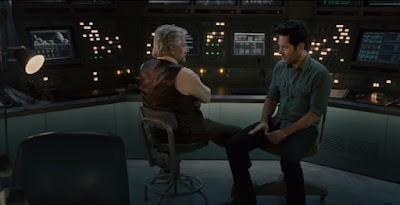
Douglas (Hank Pym) and Rudd (Scott Lang) are both solid and effective in their roles, though not quite at the 'star-making' level of other Marvel Studios movies.

The first couple of acts of this film do feel uneven in some ways, because the times that it looks like it is going to properly parody the super-hero genre - such as the montages where Pym is training Lang in how to use the Ant-Man powers - it doesn't go as far as it could.  It's as though it pulls its punches at the last moment when you're expecting a gag at the expense of the inherent silliness of the concept, but then it jumps back to a more straight-forward portrayal of 'superhero' training.  Similarly there are times where the plot struggles to merge the disparate genres and arcs - the corporate espionage of Pym's concerns about Cross' creation, Lang trying to keep on the straight and narrow and be a good dad, prepping for the heist, and on top of it all the 'super' powers that come with the Ant-Man suit.  The consistent thread through all this is that Marvel sense of levity, but by now we're so used to these sort of super-heroics delivered with a witty one-liner, that there are times the comedic aspects don't feel as effective as they should be - which is a genuine surprise given the film's development at the hands of several noted writers of comedy TV shows and/or films.

It's a good job then that the cast, as is usually the case with Marvel Studios movies, are fully committed and effectively portray their roles.  Douglas' portrayal of Pym as a slightly paranoid, traumatised, at times manipulative mentor/father is perfect for the role (especially if you know anything about the character's history in the comics - though don't expect any references to spousal abuse).  Rudd is highly likable as the thief with a conscience, trying to do the right thing to get access to his daughter, and learning about the Ant-Man powers with a mix of wonderment, semi-disbelief and excitement that are quite believable.  The supporting cast are solid, Lily making the most of her arc as the angry daughter who softens when she learns the truth about her mother; and Lang's ex-con associates Luis (Michael Peña), Kurt (David Dastmalchian) and Dave (T.I.) - who get most of the more effective comedy beats.  The only slight weakness is the villain Cross - despite Stoll's visible efforts to give him nuances beyond the usual psychopathic corporate madman, the script doesn't quite do enough to make his motivations convincing beyond stereotypical villainy.

The scenes where Ant-Man is miniaturised are impressively realised, and are one of the film's best aspects

There are probably still a few people that will forever lament the Edgar Wright version of this film that we never got to see.  However, whilst it is likely you'll watch this trying to spot Wright's influences on the story and script, this is far from a journeyman effort from Reed.  In fact, some of the moments that feel like they could have been from Wright actually came from Reed himself.  It is pleasing to say that probably the two best scenes in the film - montages where Peña's Luis rambles almost stream-of-conscious about 'tips' he's gotten about potential 'jobs' for Lang - feel like the sort of thing Wright would have brought to the film, as they are energetic, expertly cut, and the funniest moments in the film.  But these were actually put in from Reed's own ideas - he has put his stamp on this film very effectively.

None more so than the attention to detail and technical aspects of this film, which it has to say offer some truly impressive visuals, and mark this film as another achievement milestone in CGI special effects.  The most striking and immediately impressive is the de-ageing of Michael Douglas for the film's opening scene, set over 25 years ago - here the use of digital effects to make Douglas look like he did in his 1980's prime is the most convincing use of the technology on film so far.  As gob-smacking as that is, the other effects really deliver where it most matters, that is when Lang shrinks and we get to see the world from his 'ant-sized' perspective.  All the scenes and shots when he is in 'ant-mode' are impressively detailed and capture a realistic 'micro-photography' look.

This film will also make you look at ants with a new-found respect..!

'Ant-Man's biggest achievements are in its effects work; and in how Director Reed took what could have been a poisoned chalice or a 'Journeyman' gig and actually fashioned something that bears flashes suggesting a talent for comedy, drama and a tremendous grasp of emerging technology in effects and film-making.  In many ways the film feels as though Marvel Studios are playing safe and not straying too far from their formula - whilst it is never a total detriment to the film, there are moments you can't help but feel they could have done more to make it more subversive and genre-skewing.  That said, it is typical of the entertainment and fun audiences have come to expect and enjoy from Marvel releases, and delivers in that respect.  What at one point looked as though it might be the studio's first failure is far from it; but it will be welcome to see their films take some more risks with tone, narrative and structure in the future.

So what does 'Ant-Man's arrival mean for the MCU?

While long-time Marvel Comics fans may still lament the absence of Hank Pym from the MCU until now, and the resulting story changes (in the comics it's Pym that creates Ultron, not Tony Stark), we now have technology that shrinks - and enlarges - objects and people.  Going forward, whilst Pym himself might not be a player in future cross-over movies such as Infinity War, Scott Lang will more than likely be (he's already confirmed for 'Captain America Civil War', though I'll discuss that below).  In the comics Pym 'reverses' his shrinking technology to become Giant-man, or Goliath - given that in Ant-Man we see the technology 'embiggening' an actual ant and a Thomas The Tank Engine Toy, it's pretty safe to say that at some point Lang will apply that to himself.  There are rumours we may see this in Civil War, though it's a safe bet it will have happened by Infinity War, and if not,  during those films.
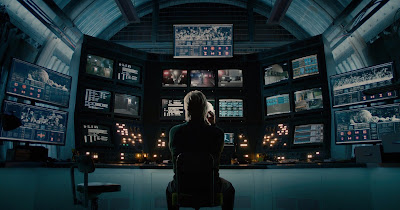
Whilst Pym isn't the controversial character he has been in the comics, this portrayal shows him as slightly paranoid, and there's something almost Machiavellian and manipulative in the way he gets Lang to enact his Heist plan.

The film also marks the first MCU of another favourite of comic fans, the Wasp, normally associated with Pym's wife Janet van Dyne.  Although we only get to see her in a flash-back, there are suggestions that potential Ant-Man sequels could feature more of Pym's escapades as the titular hero during the '60's, '70's and '80's, so we could yet see the 'classic' comic iteration of this character.  As well as that, given the first of the two post-credits scenes reveals that Pym & his wife were working on a version of the Wasp suit for their daughter Hope, it seems a bit of a no-brainer to say we'll see Wasp in the 'current' MCU too.  Marvel Studios boss Kevin Feige himself has stated we'll see Wasp in another movie before the end of 'Phase 3' (which culminates with Infinity War and The Inhumans).
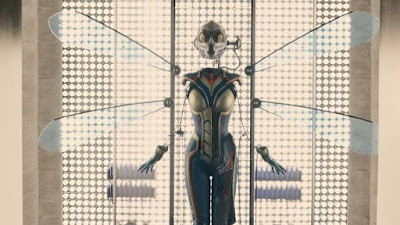
It seems pretty certain we'll be seeing Wasp in a forth-coming MCU movie

With regards to storylines they could incorporate Ant-Man in to, the better known ones involving Pym have tended to be those involving his stints with the Avengers, or when he creates the Yellowjacket which turns him slightly psychopathic.  Given they've used the Yellowjacket for this film, the 'evil Pym' storyline seems very unlikely.  My bet would be on the thread the film leaves open, which has agents of Hydra taking Cross's version of the Pym Particle, and them trying to put it to use (although some believe this could feature in Season 3 of Agents of SHIELD, as Hydra Agent Grant Ward has been confirmed as the main villain of the series).  Regardless, we're guaranteed to see Ant-Man and Wasp (and maybe even a Goliath) in the not too distant future - I wouldn't be surprised to see them as part of an Avengers line-up at some point during either of the Infinity Wars movies.
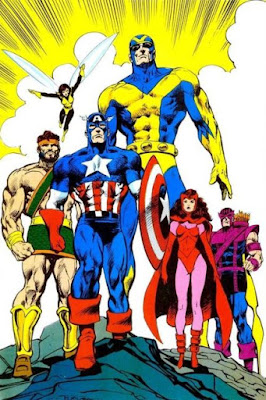
Ant-Man became Goliath and was part of one of the classic Avengers line-ups in the comics.

We've had our first glimpse of 'Captain America Civil War'

The second post-credits scene has been confirmed by Feige to actually be a scene from the next MCU film, one of the most eagerly awaited comic movies of next year; it depicts Captain America and Falcon in some abandoned warehouse or workshop, with Bucky/the Winter Soldier's bionic arm trapped in a vice.  It seems they're in a quandary over their apparent captive, talking about 'the accords', which is no doubt a reference to the Laws drawn up regarding superhero activity that causes the fall out between Stark and Cap.  It seems they need someone to get something covertly, and the final line has Falcon saying "I know a guy", before it cuts to black and the message 'Ant-Man will return'.
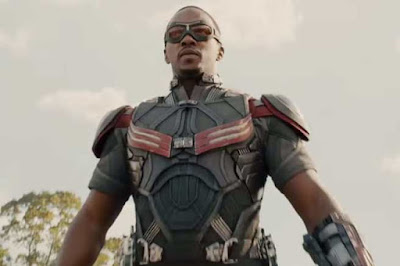
Sam 'Falcon' Wilson's appearance in 'Ant-Man' made for a fun scene, and sets out how Ant-Man could be involved in 'Civil War'

While we're used to Marvel's post-credit scenes now, some of them being jokey-punchlines to a film, others foreshadowing events of future films, this scene is a really interesting choice for Marvel Studios.  Firstly, it's not a scene which has been specially filmed for Ant-Man, but is something from a still-filming (therefore unfinished) movie (as an aside, I'd be interested to learn how Civil War directors the Russo Brothers felt about a scene from their film hitting cinemas before they'd finished making it!).  It has been dropped in without context, so though we know the vague plot upon which the story hinges, we don't know the exact events that lead to it, or at which stage of the film it occurs.  Secondly, it is not explicitly setting up any characters, events or 'maguffins' that are part of Civil War.  It's surmised that when Falcon says "I know a guy" that it is referring to Ant-Man, and this seems very likely; Feige himself stated they chose this scene for the end of Ant-Man due to this line throwing back to something Pym himself says during the film.  Also, following the fun interlude where Lang has to steal some tech from The Avengers' base, having to unwittingly take on Falcon to do so, the final scene of the film shows that Falcon is trying to track down this Ant-Man.  So this post-credits scene does some work in establishing that Ant-Man is involved in Civil War, but it doesn't fully explain why - crucially though it seems he's at least being employed by Cap's side, even if he is not explicitly fighting alongside those against whatever Law is at the heart of the conflict.
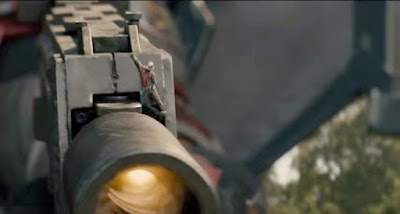
Although their first encounter ends in a fight between the pair, will Ant-Man be on the side of Falcon in 'Civil War'?

Finally, I'd say this scene is a positive move for Marvel Studios - something that 'Avengers Age of Ultron' was criticised for was the way in which there are a number of references to things which didn't really serve the story in that film but are setting up elements of future films.  Whilst there was much of this in the first 'Phase' of MCU films leading up to Avengers, I can accept the criticism - it made sense there, but now we've an idea of what things are going to happen and where the stories are going, we don't need that level of foreshadowing - just tell us the story!  Including this scene at the end of Ant-Man avoids the name-dropping of characters or Maguffins, but still indicates where the ongoing MCU is heading and how certain characters are going to be involved.  We know that the next film is a Captain America one, we know that it encompasses a great number of other characters, but it is important that it still continues the arc established in Cap's previous films involving his friend Bucky.  This scene suggests that Civil War is going to be a lot more personal and intimate, in terms of key character stories, than we may be anticipating based upon the cast and the comic story which it is partly taking inspiration from.

It wasn't just this scene that pointed towards the future of the MCU without waving Maguffins around or introducing new characters - one moment at the end of 'Ant-Man' very cleverly sets a precedent for an element of Marvel comics which is likely to be very important during Phase 3...

Our glimpse of the 'Quantum Realm' is the first step in introducing the 'weird' to the MCU

In order to defeat Darren Cross and his 'Yellowjacket' suit, Scott Lang has to break the most important rule of being Ant-Man - he turns off the regulator that controls how far he can shrink, and eventually goes sub-atomic before entering the 'Quantum Realm'.  It's described by Pym as being a place where the laws of physics - or at least, our capacity to understand them - are no longer applicable.  This scene, as well as being visually stunning and offering a an exciting finale that doesn't rely on something falling from the sky, is arguably the first step for the MCU in to the realms that are going to be a key part of next year's 'Doctor Strange' movie.  That film will see 'supernatural' threats being addressed, a staple of the comics, but something that so far is beyond the hard(ish) sci-fi underpinning much of the MCU thus far. Feige has suggested that there will still be some scientific basis to the threats faced by Doctor Strange, so as to lend them a sense of plausibility - and Ant-Man's trip to the Quantum Realm is arguably the stepping stone towards this. 

In order to defeat villain Darren Cross, Lang takes us on a journey to a whole new area that the MCU will explore in future films...

Although not explicitly stated, when Ant-Man goes to the Quantum Realm it is strongly implied the technology has crossed him in to another universe or dimension that is beyond our current scientific knowledge and understanding.  Multi-dimensional travel is a staple of the comics, where there are parallel universes, or far stranger places.  If this scene establishes there are these universes or realities beyond our current scientific understanding, there is a basis to introduce Doctor Strange, his mystical abilities, and the threats he takes on - and not have it seem like a stretch for audiences to accept.  What if, for example, the inhabitants of one of these alternate universes, dimensions, etc already have the knowledge and technology to cross in to our universe - and these are the beings that Doctor Strange - and the Sorcerers before him - have been keeping at bay?
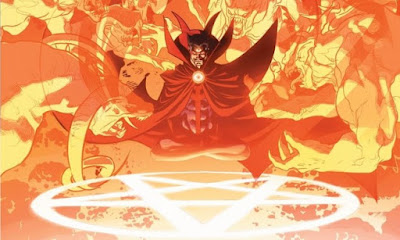
Doctor Strange will hopefully take us to even more bizarre and weird places than the 'Quantum Realm'...

This is a thread that will enable Marvel Studios to introduce this element from the comics and not have it seem, well, ridiculous and far-fetched, even in a universe including alien invasions and super-science.  It will also be an important thread that would enable stories allowing Fox and Marvel Studios to collaborate in bringing the Fantastic Four or even the X-Men in to MCU movies (which I've already talked about previously).  As well as that, I wouldn't be surprised if alternative dimensions, universes and realities feature in the Infinity Wars movies.  Either way, Ant-Man's journey to the Quantum Realm is a fascinating and exciting glimpse of an important part of future MCU films.  Going on how trippy and weird and visually amazing this scene was, it sets a high bar for Doctor Strange - which hopefully will be the weirdest and most unique film that Marvel Studios will make.


That's it for this month, next time I'll be examining the 'rivalry' between the Marvel and DC movies, and most likely having a look at Fantastic Four and any other exciting Marvel movie related news.  Thanks for reading!